


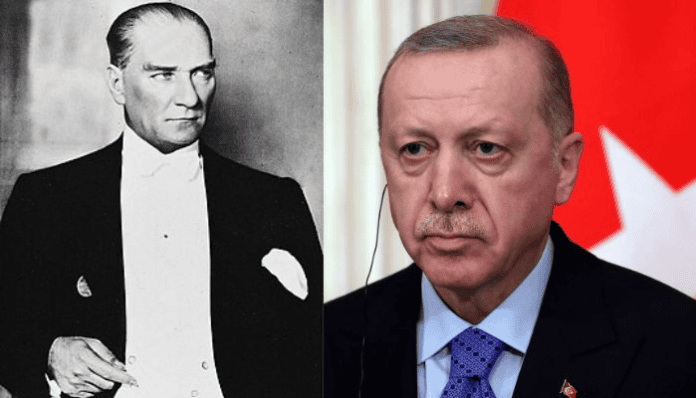
Summary: In Part 4 of its series Doha and Ankara Unmasked, HinduPost examines the theology, and the states, that fund and promote the Islamism behind Hindu-hate in Bharat and across the world. OpIndia traces how Turkey under Erdogan has dismantled Ataturk's secular republic in pursuit of what it calls a desire to revive the Caliphate: a Diyanet grown into a vast apparatus that pushes Sunni identity and sidelines Alevis, Hagia Sophia turned back into a mosque, a declared mission to raise a "pious generation", and open alignment with the jihad-preaching Muslim Brotherhood. It ties this turn to Ankara's backing of Pakistan after Uri, Pulwama and Pahalgam and during Operation Sindoor, including Bayraktar drones used against Bharat, writes Shraddha Pandey.
Why it matters: Turkey's hostility to Bharat is no passing diplomatic quarrel; it follows from what Erdogan has made Turkey. The ideology that reconverted Hagia Sophia is the one arming Pakistan.
Source: “Turkey has steadily moved away from Ataturk's secularism towards Islamist fundamentalism under President Erdogan: Read how this shift gradually took place during last 20 years”, OpIndia · 27 May 2025
Turkey or Turkiye straddles Europe and Asia. Bordered by eight countries, Turkey is home to a diverse landscape of mountains, plains, coastlines along the Black Sea, Aegean and Mediterranean. The country, however, is fast losing its cultural diversity and principles of secularism to Islamist fundamentalism thanks to Turkish President Recep Tayyip Erdogan's unannounced yet desperate desire to revive the Caliphate and become its Khalifa (Caliph).
The Republic of Turkey was established on 29th October 1923, by the military commander and an imposing political figure, Mustafa Kemal Ataturk, after the collapse of the Ottoman Empire following the Treaty of Lausanne. Ataturk envisioned Turkey as a secular and democratic modern nation-state modelled on Western values…
Read the full article at OpIndia →
This is Part 5 of HinduPost’s series Doha and Ankara Unmasked. Read all parts →
