


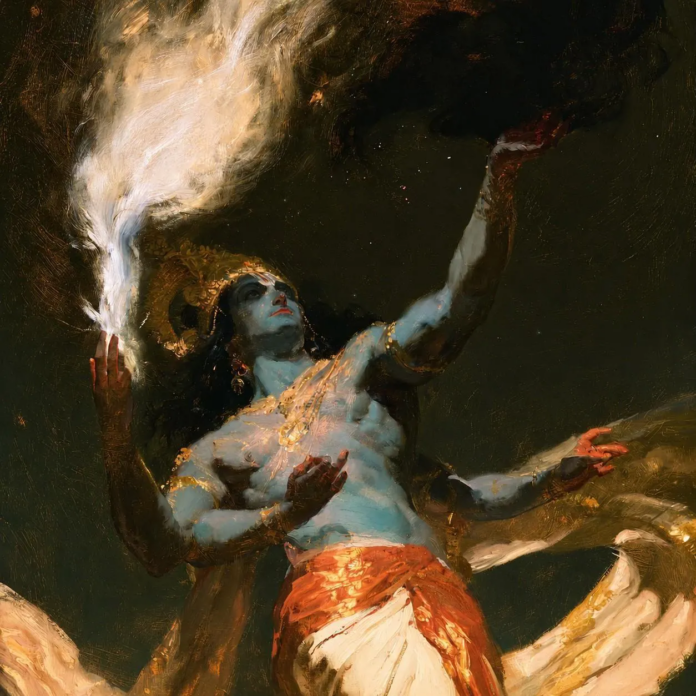
“The Birth of Kṛṣṇa”, CSHC and Ravinder Reddy Substack, 2 Sep 2026.
“Mahābhārata, Ādi Parva 1.189.31 to 32 (Debroy translation):
Hari plucked two hairs from his body. One was white and the other was black. These two hairs entered the wombs of two women from the Yadu lineage, Rohiṇī and Devakī. One of them became Baladeva and the second one that was black became Keśava.
sa cāpi keśau harir udbabarha śuklam ekam aparaṃ cāpi kṛṣṇam | tau cāpi keśau viśatāṃ yadūnāṃ kule sthirau rohiṇīṃ devakīṃ ca | tayor eko baladevo babhūva kṛṣṇo dvitīyaḥ keśavaḥ saṃbabhūva ||
1. Midnight
Imagine an ancient prison in Mathurā, a guarded chamber somewhere inside a fortified palace. Devakī is in labour with her eighth child. Six sons are dead, killed by Kaṃsa one after another. Her seventh pregnancy mysteriously ended before birth, or so Mathurā believes. Vasudeva is beside her and, in the familiar telling of this scene, the two are being held under guard while Kaṃsa waits for the child he has been warned will one day kill him.
This is no ordinary birth. Kaṃsa has spent years waiting for the prophecy to come true. The eighth child will be his death. Devakī is giving birth knowing that the moment the baby is discovered, Kaṃsa will come for him too.
Even the sky becomes part of the story. In the Padma Purāṇa’s section on the Janmāṣṭamī, Sanatkumāra explains that when the dark-half eighth of Śrāvaṇa falls under Rohiṇī, the observance is called Jayantī. The same passage then tells the worshipper to recreate that sky on the shrine itself: Rohiṇī in gold and the Moon in silver…………..”
Read the full article at the Substack by CSHC and Ravinder Reddy.
