


“The future belongs to the young.”
There are moments when a country pauses to hear the voice of its young people a little more clearly than usual. In the recent months, across streets and campuses, young Indians have questioned, protested and demanded to be heard. Their voices may be angry, impatient or imperfect, but there is something significant in that restlessness: the refusal to simply accept the country as it is.
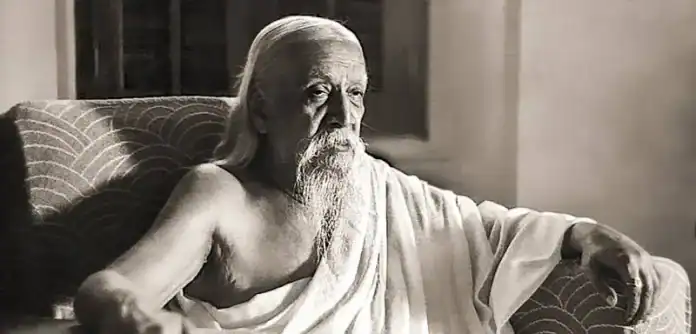
It is striking, then, that on 15 August, when India celebrates its Independence, we also remember the birth of Sri Aurobindo. More than a century ago, at another moment of political awakening, he wrote to the youth of India: “It is a young and new world which is now under process of development and it is the young who must create it.”
There is something powerful in that word: create.
Youth is not simply about being young. It is the possibility of the future. It is about believing that what exists does not have to be the final word. It is to question what has been handed down, to refuse complacency, to imagine differently, and to begin again. Sri Aurobindo did not ask for passive obedience from the young. He asked for courage, aspiration and action. He asked the youth of India to learn “to think—to think on all subjects, to think independently, fruitfully, going to the heart of things.” He even urged them to “accept nothing on trust” but to question and form their own conclusions.
Perhaps this is what makes the rising voice of young Indians worth paying attention to today. Because there is a belief that questioning the nation means rejecting it. However, we question because we care what happens to the country. We ask because we believe it can be better. We protest because we still expect something from the nation.
But there is another, harder part to questioning.
A voice can protest. It can expose what is wrong. It can demand answers. But eventually, every generation has to confront the question: what will we build?
Sri Aurobindo’s call to young India was not simply a call to resist. “It is the young who must be the builders of the new world,” he wrote. They must dedicate themselves “not to the past or the present but to the future” and undertake “a whole-minded and indefatigable labour for the nation and for humanity.”
That is a greater challenge and responsibility for the youth, than merely being angry at what is wrong. Anger can awaken us, but it cannot, by itself, build a nation. Questioning is necessary, but so are knowledge, discipline, patience, imagination and the ability to turn ideals into institutions, ideas into action and protest into progress. Sri Aurobindo shares further that, “A brave, frank, clean-hearted, courageous and aspiring youth is the only foundation on which the future nation can be built.”
And this brings us to another question: what is the nation we are trying to build?
“For what is a nation? What is our mother-country?” Sri Aurobindo asks. “It is not a piece of earth, nor a figure of speech, nor a fiction of the mind.” It is, he says, “a mighty Shakti,” a living force composed of the millions who make up the nation.
To see India as Mother, then, is to see the country as something living, something to which we belong and for which we must carry responsibilities. It means that patriotism cannot be reduced to remembering the sacrifices of those who came before us. It must also mean asking what we owe to those who will come after us.
Sri Aurobindo’s call to young India was ultimately a call toward the future. “Our call is to young India,” he wrote. “It is the young who must be the builders of the new world.” And those builders, he said, must dedicate themselves “not to the past or the present but to the future.”
That is perhaps the spirit with which we should approach this Independence Day.
Let the youth question. Let them challenge. Let them refuse silence when something is unjust. But they must also find the strength to build beyond what they oppose. Their nationalism should be confined neither by blind pride nor by nostalgia, it should instead be a commitment to a country whose future is still unfinished.
India is not only the India we inherited.
She is also the India we are making.
And if the future does indeed belong to the young, then the real question is not merely whether they will raise their voices.
It is whether, having found their voice, they will have the courage, character and imagination to build it.
—Ritaja Mishra

Beautifully expressed.
Sri Aurobindo’s call to the youth is not merely to question what is wrong, but to become conscious builders of what is yet to be.
May our young people carry not only courage in their voices, but also character in their lives, clarity in their thought, and love in their action.
What a powerful reminder for this Independence Day. ?