


The Karnataka Cabinet’s decision to approve the Karnataka Regulation of Use of Government Premises and Public Property Bill, 2026, has raised fresh questions about the Congress government’s ongoing confrontation with the Rashtriya Swayamsevak Sangh (RSS). Although the government insists that the proposed legislation is a neutral measure applicable to all organizations, its timing and the political context have inevitably raised concerns that the law is being shaped with the RSS in particular mind.
As per The News Minute reports, the proposed Bill seeks to establish a statutory framework requiring organisations to obtain prior permission before conducting activities on government premises and public property, including parks, playgrounds, roads, and other public assets. It is expected to replace a government order issued in October 2025, which had introduced a similar permission requirement but was subsequently stayed by the Karnataka High Court.
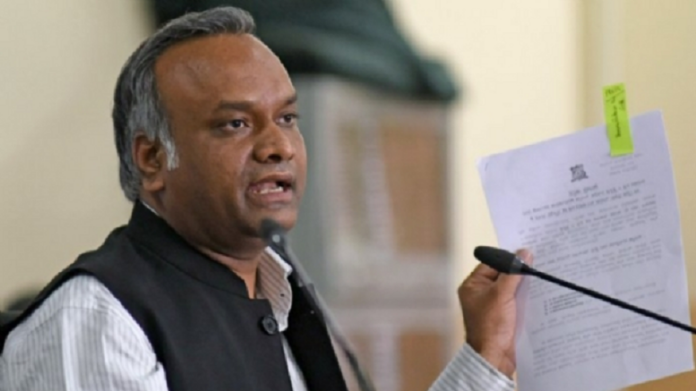
On paper, the government says the measure is universal. Chief Minister D K Shivakumar has argued that anyone seeking to conduct an event on public property must follow the same procedure. Home Minister Priyank Kharge has similarly rejected the suggestion that the Bill is aimed at RSS. The controversy also raises a broader political question: from the RSS to Hindutva and now ‘Har Ghar Tiranga,’ why does Priyank Kharge seem determined to pick a fight with every expression of nationalist Hindutva sentiment?
But legislation cannot be viewed entirely in isolation from the political circumstances surrounding it. The Bill comes amid repeated disagreements between the Karnataka government and the RSS over public-space activities, including baithaks and sanchalanas (route marches). Media reports have consequently described the RSS as being central to the political backdrop of the proposed law.
That raises a fundamental question: if the law is genuinely about regulating public property, why has the RSS become the central reference point in the political debate surrounding it?
The RSS is not an organization that appeared suddenly in Karnataka’s public life. Established in 1925, it has built a vast network of volunteers and social service initiatives over the past century. Its supporters point to work in education, rural development, social harmony, disaster response, environmental activities, and community service as evidence of its contribution to society. The organization itself reports that swayamsevaks are involved in a large network of service projects across the country.
Its record of disaster relief is also part of the organization’s public narrative. RSS records describe relief and rehabilitation efforts during major disasters, including the 2010 North Karnataka floods, when the organization says thousands of volunteers worked across affected villages and undertook housing rehabilitation.
More recently, the RSS reported that 18,842 swayamsevaks received training through 95 training camps in 2026, covering areas including village development, family awareness, disaster management, and environmental work. Such activities illustrate why supporters argue that an organization with such a large grassroots presence should not be reduced to the question of where it conducts a meeting or a route march.
The larger issue, therefore, is not whether public property should be regulated. Reasonable regulation of public spaces is legitimate. Government land belongs to the public, and rules concerning safety, traffic, crowd management, sanitation, and the protection of public assets can apply equally to all organizations. The real concern arises when a seemingly general law is introduced in an atmosphere where one particular organization is repeatedly placed at the center of political confrontation.
Ultimately, the Karnataka government’s proposed bill raises a much larger question than the regulation of public property: Is this governance, or a political vendetta? When leaders such as Priyank Kharge repeatedly target the RSS in public discourse, and a new law emerges amid an ongoing confrontation with the organization, the assurances of equal application naturally invite scrutiny. The RSS has spent a century building a vast volunteer network and contributing through social service, disaster relief, education, and community work; it cannot simply be reduced to a political adversary to be controlled through permissions. Congress may have left British rule behind, but governance must not descend into a new “permission raj” where civic organizations need the government’s blessing to exercise legitimate public activity. Public spaces belong to the people, and laws governing them must protect equality and constitutional freedoms- not become instruments for silencing or selectively restricting organizations that happen to be politically inconvenient.
