


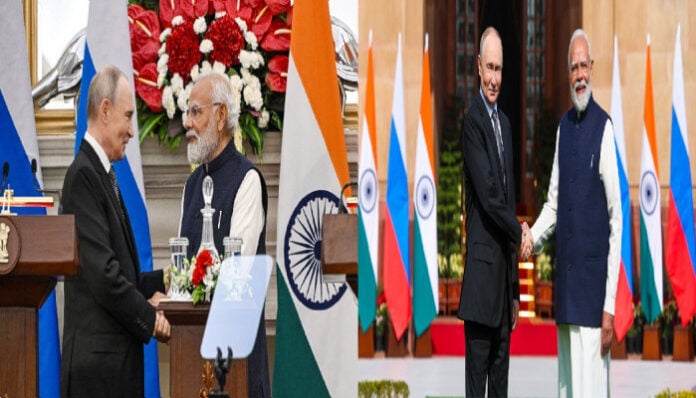
“Fostering a Time-Tested Strategic Partnership: Redefining a Multi-Polar World”, My Ind Maker, February 12, 2026
“The changing landscape of global politics brought the idea of multipolarity back into the international spotlight at the beginning of 2026. The world order is not based on one power or bloc being in charge, but on many centres of influence working together. Last year, the US openly endorsed the idea of a G-2 condominium with China, redefining the global geopolitical order. Resistance to the idea of a G-2 condominium forced US President Trump to enunciate the C-5, rather than the G-7, as the core group of countries for maintaining a stable international order. This grudging acceptance by President Trump has renewed the debate on the inevitability of a multipolar world, while acknowledging geopolitical rivalries and institutional asymmetries.
India’s signing of multiple free trade agreements with the UK, the EU, New Zealand, Oman, the UAE, etc., has forced the US to come to the table and walk back the punitive 25% tariffs on Indian exports to the US for purchasing discounted Russian oil. Furthermore, refunding the already collected tariffs to India suggests that the US is now forced to accept the reality of the India-Russia bilateral relationship, which cannot be jettisoned on flimsy issues. Despite numerous proclamations from Washington DC, India has not given an iron-clad commitment to stop buying crude oil from Russia and has only alluded to market conditions deciding India’s energy import preferences.
In this context, the annual India- Russia bilateral summits stand out as an important diplomatic platform that shows how both countries want to work together to make the world a more balanced place. Both countries have increasingly advocated for strategic independence, decisional autonomy, diversified partnerships, and sovereignty and equality for all, as the foundation for global stability. The annual summit serves as a crucial platform that reinforces long-standing bilateral strategic ties, underscoring the commitment of both countries to a balanced world order and inclusive global governance. In other words, it is an institutional framework that serves as an anchor for stability in bilateral relations despite headwinds from other powers…….”
Read full article at myind.net
