


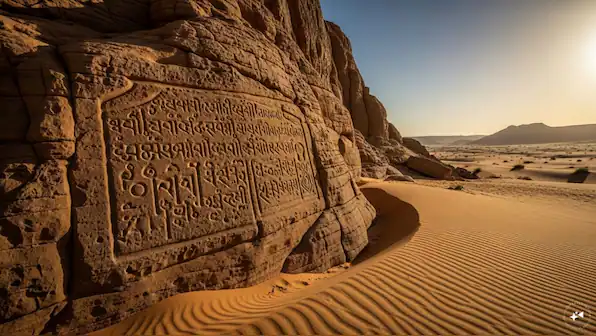
“When graffiti becomes history: Indian imprints in the land of Pharaohs and beyond”, First Post, February 14, 2026
“ “Bunty loves Pinky. Pierced heart.” “Vikram + Poonam = heart.” Or just plain “ILU (I love you).” Anyone who has visited a heritage site in India would have seen these messages scribbled on the walls. These random graffiti are the most ubiquitous modern imprint on our history and the most wince-inducing as well. But these modern-day vandals are not a species indigenous to India alone. Nor are they a peculiarly 21st-century phenomenon.
In fact, the astonishing discovery of 2000-year-old graffiti left behind by ancient Indian travellers and merchants on the tombs of Egyptian pharaohs has hit headlines earlier this week, causing excitement not just among historians and archaeologists but the general public as well. Scribbled onto a number of pharaonic tombs in the Valley of Kings, these 30 inscriptions – of which a majority are in Tamil Brahmi – document not just ancient India’s deep mercantile and maritime relations with Egypt but also the very human need to imprint one’s presence on history.
The inscriptions themselves are straightforward enough – one reads “Cikai Korran vara kantan”, or “Cikai Korran was here”. A fellow traveller dittoes the sentiment: “Kopran vara kantan” or Kopran was here. These intrepid Indian seafaring merchants – the same tribe who carried fine Indian goods like the Berenike Buddha or the Pompeii Yakshi/Lakshmi to Egypt and Rome – perhaps felt compelled to leave behind some sign of their presence on a monument which would have been ancient even 2000 years ago……”
Read full article at firstpost.com
