


“Energy Supply: National Interest First”, Open the magazine, March 06, 2026
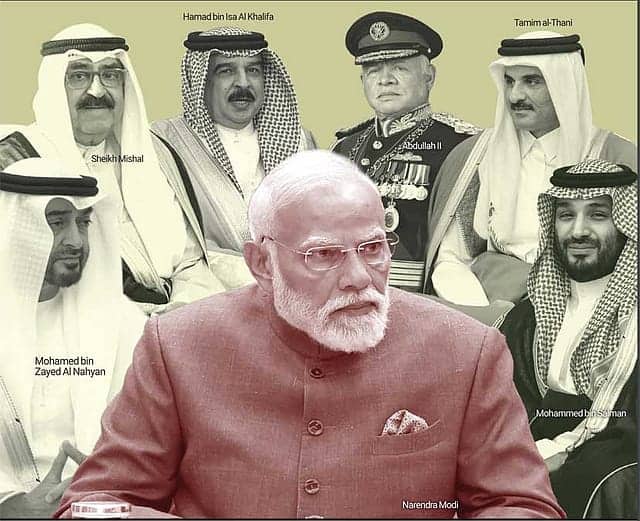
“SOON AFTER ISRAEL AND THE US LAUNCHED a massive aerial blitz against Iran on February 28, Prime Minister Narendra Modi spoke to key leaders in the Middle East, not only voicing concern about the evolving situation but also condemning attacks by the regime in Tehran on targets in Saudi Arabia, Jordan, Iraq, Bahrain, Oman, Kuwait, and Qatar, as well as Gulf cities like Dubai. Between March 1 and 3, Modi spoke to King Abdullah II of Jordan, Crown Prince Mohammed bin Salman of Saudi Arabia, King of Bahrain Hamad bin Isa Al Khalifa, UAE President Mohamed bin Zayed Al Nahyan, Sheikh Mishal of Kuwait, and Emir Tamim al-Thani of Qatar. The prime minister denounced the violation of sovereignty and territorial integrity and said India stood in solidarity with the nations at the receiving end of Iran’s retaliation.
It did seem India had chosen a side in the latest war to roil the Middle East and it was not Iran. There has been no official contact with Iran after the initial phone call by External Affairs Minister S Jaishankar to Iranian Foreign Minister Abbas Araghchi to share India’s “deep concern” over the events. On the same day, Jaishankar
told Israel’s Foreign Minister Gideon Sa’ar about the desirability of “dialogue and diplomacy” to de-escalate tensions. The formal statement was guarded, iterating the need for restraint even as it said sovereignty and territorial integrity of “all states” be respected. A day later, Iran confirmed the death of Supreme Leader Ayatollah Ali Khamenei. The decapitation of a regime India recognises and has dealt with was no minor event but events were unfolding rapidly in a region that has seen conflict and war for decades……”
Read full article at openthemagazine.com
