


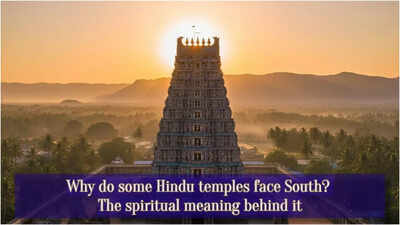
“Why do some Hindu temples face South? The spiritual meaning behind it”, Times of India, February 21, 2026
“When a temple faces South; it is rarely random
Most temples we visit tend to face East, so when a shrine opens toward the South, people often assume something unusual is going on. In reality, temple orientation is rarely random. It usually reflects what the deity represents and what kind of spiritual experience the temple is meant to offer.
South as the direction of time and awareness
In traditional thought, the South is associated with Yama, the keeper of time and the natural order of life. Because of that, the direction carries a sense of seriousness. Not fear, but awareness. Temples aligned southward often lean toward themes of protection, karmic balance or inner transformation rather than outward prosperity.
Why certain forms of Shiva face south
That’s one reason certain forms of Shiva are linked with this direction. Dakshinamurti, for example, is depicted facing South as the silent teacher, suggesting knowledge that dissolves ignorance rather than simply granting wishes. In such cases, the orientation becomes symbolic. The temple doesn’t just host a deity. It quietly communicates the nature of the path being offered there……”
Read full article at timesofindia.indiatimes.com
