


Besides providing food, shelter, education and love to their child, what is the role of parents?
- Have we prepared our children for life?
- Do they have clarity of purpose and responsibility? Do they understand the concept of Dharma?
- Are they grounded enough not to be carried away by success, nor disheartened by setbacks?
- Do they have the courage to face challenges and make the tough decisions?
- In a life full of ups and downs, do they have the equanimity to live fulfilled lives?
- Have we equipped them with the knowledge of managing wealth, health, relationships, and the path to Self-Realisation?
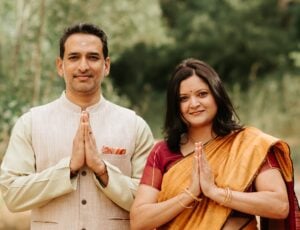
Vidhya and I asked ourselves these questions as our daughter Uma was preparing to leave home for university and start a life of her own as an adult. Sure, we’ve had these conversations over dinner, bedtime stories, and car travels, but would Uma remember it all? And, had we articulated this well?
One evening, Uma asked us why bad things happen to good people. We could have offered a rehearsed answer. Instead, we found ourselves exploring the question together — drawing on the concept of karma, not as fatalism, but as an invitation to ask what we can learn and how we can respond. That conversation lasted well past dinner. It was messy and unresolved. And it stayed with us — the kind of conversation we wished more families felt equipped to have.
Providing a Framework for Life
Parents are the primary transmitters of a meaning-making framework – a way of interpreting the world, understanding the realities of life, and locating themselves within a larger community. Every family, whether consciously or not, passes on a worldview. The question is whether you do it deliberately or by default.
A child who grows up without a coherent inner framework — some sense of what matters and why — will borrow their framework from wherever they can find one: peer culture, social media, consumer advertising, the loudest voices around them. The parent who abdicates this role doesn’t leave a vacuum. They simply cede the territory to less thoughtful influences.
Role Models
Parents are the first and most enduring demonstration their child has of what an adult human life looks like. Children absorb far more from what they observe than from what they are told. Uma has seen us handle disappointment, how we treat the cab driver or the waiter, or our family and friends. She has helped us clean the house and segregate our garbage. Uma often complains when asked to eat salads and vegetables, but we know she also appreciates the balanced nutrition we provide. She sees us doing yoga in our living room and may sometimes join us.
Vidhya and I don’t pretend to be perfect. But we try to be mindful of who we are as people, and what we represent to our family, and invite Uma into the same journey.
Support
Parents know the full arc of the child’s story. They remember who the child was before the world shaped them into who they are becoming. They can see continuities and gifts that the child themselves cannot yet perceive.
To be truly witnessed by another human being — to have someone who says, in effect, I see you, I have always seen you, and what I see is worthy — is one of the deepest needs we carry. A parent who fulfils this role gives their child something that no school, no therapist, no friend can quite replicate.
It is ordinary. It is irreplaceable. And it costs nothing but presence.
Carrying Forward a Tradition
This is a role that is particularly at risk in modern, mobile, globalised families — and one that we feel with acute urgency. Every child is born into a river of history that flows long before them and will continue long after. Our ancestors navigated hardship, made sacrifices, and held certain values at great personal cost. We belong to a cultural and philosophical tradition that contains accumulated wisdom about how to live.
Parents are the bridge between that inheritance and the child standing before them. If the bridge is not built — if parents are too busy or too ambivalent about their own heritage — the child is cut off from a source of depth and rootedness that nothing in contemporary culture adequately replaces.
India’s philosophical tradition — the ethical clarity of the Yamas, Niyamas and the Thirukural, the philosophical depth of the Bhagavad Gita, Vedas, Upanishads and the Puranas, the practical wisdom of Asanas, Pranayama, Dhyana, Ayurveda, and the Arthashastra — is not a museum piece. It is a wholesome framework and a living toolkit for navigating a human life. But it can only be passed on through conversation, through story, through the patient willingness of one generation to sit with the next.
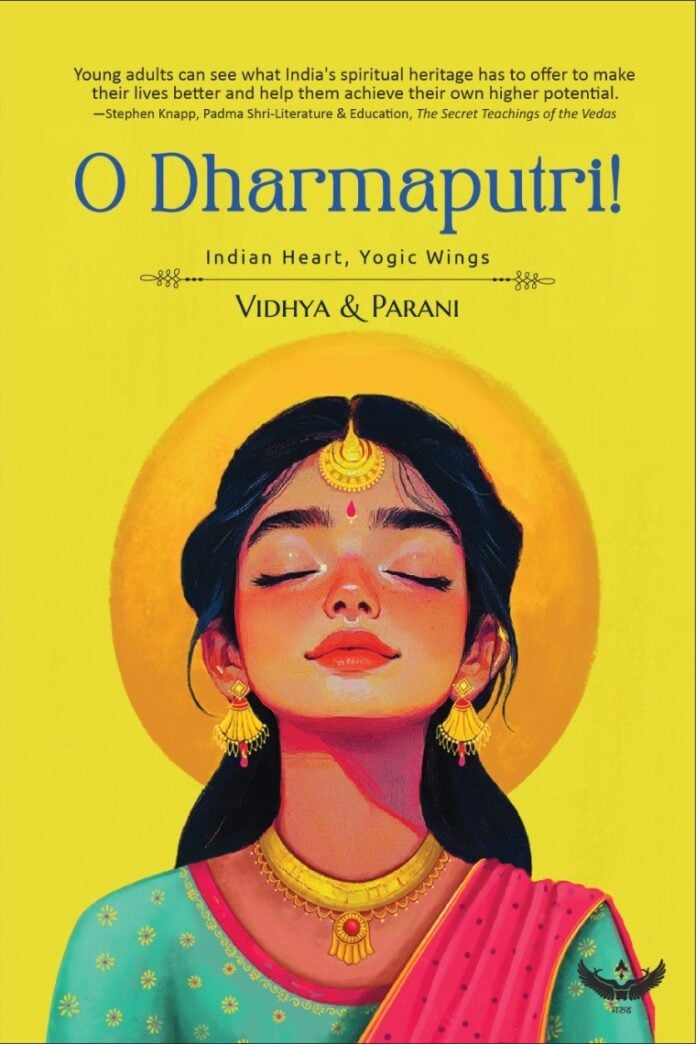
O Dharmaputri!
When we shared these thoughts with family and friends, they nodded in recognition. But a different question emerged: how do you articulate all of this to the next generation — especially when many parents feel they don’t have a firm enough grasp of the tradition to pass it on confidently?
That question led to our attempt to write a letter for Uma before she left — to gather everything we believed, everything we’d learned, everything we wanted her to carry with her — and find words for it. That letter turned into a book, O Dharmaputri! We don’t offer it as a complete answer. We offer it as a companion for families who want to have these conversations but aren’t sure where to begin.
The answers, we believe, are already within you. This book simply helps you find the questions.
— Vidhya & Parani
