


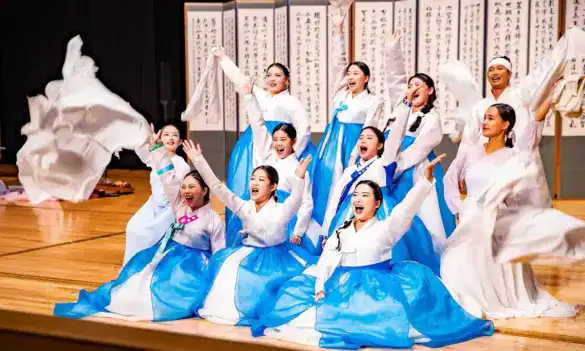
“India and South Korea: Forging Tomorrow’s Alliance Through Youth and Culture”, India Narrative, January 31, 2026
“The India-South Korea partnership stands out as a beacon of optimism amid geopolitical tensions. This relationship goes beyond trade and defence agreements. The vibrant exchange between our peoples, especially among the youth and their cultures, is strengthening bilateral ties. India is the world’s largest democracy. The Republic of Korea (ROK) is a technological leader. Together, their people-to-people link forms the bedrock for lasting friendship, shared prosperity, and greater global influence. Civilizational roots date back over 1,800 years to ancient Buddhist exchanges. Today, this connection is a powerful strategic force in a multipolar world free of historical conflicts.
A key driver of this optimism is the surge in cultural soft power. The Hallyu (Korean Wave) has resonated with Indian youth. K-pop groups like BTS and Blackpink are now household names. The digital revolution, aided by AI-enabled dubbing into regional languages, brings hits like “Squid Game” and “Crash Landing on You” to millions of Indian homes through platforms like Netflix and YouTube. This is a two-way street. Bollywood also fascinates Korean audiences. Stars like Aamir Khan and Shah Rukh Khan have strong followings in Seoul, thanks to movies such as “Dangal.” The influence extends beyond entertainment. According to Asia Economy, the 2025 Korea National Image Survey found that 82.3% of foreigners held a favourable view of Korea, the highest since 2018. At the same time, Indian cinema has sparked Korean interest in yoga, cuisine, and festivals. Thousands attend events like the India-Korea Cultural Festival in Seoul.
Hallyu has shifted India’s view of Korea from a distant tech hub to a major cultural influencer. Brands like Samsung and LG now feel “almost Indian.” Post-COVID digital trends and high-profile events have fuelled this connection. Yet, growth remains largely urban, leaving much untapped potential in Tier-2 and Tier-3 cities. Asymmetries persist. India’s cultural and educational presence in Korea is less developed and lacks strong institutional support. This risks a superficial relationship instead of deep, lasting bonds……”
Read full article at indianarrative.com
