


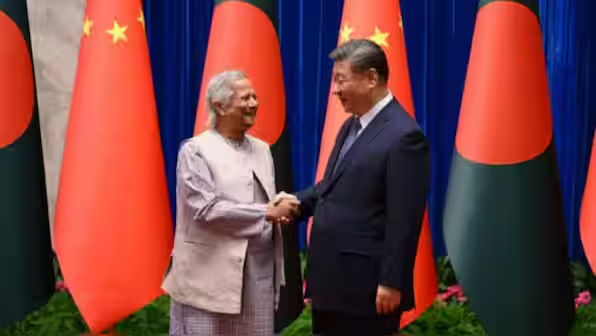
“Why Dhaka should revisit China’s sinister role in the 1971 war”, First Post, January 13, 2026
“As Dhaka’s winter air cools, the political temperature is beginning to boil. The state funeral of Khaleda Zia and Tarique Rehman’s assumption of Bangladesh Nationalist Party (BNP) leadership have garnered reactions from actors across the board. With the announcement of the national elections on February 12, 2026, Bangladesh finds itself at a historical crossroads that mirrors the seismic shifts of 1970. But while the ghosts of 1971—Pakistan, India, the US and the USSR—remain ever-present, a once-silent player from the liberation era has moved to the centre of the board.
China, which once viewed the birth of Bangladesh through the cold lens of Pakistan’s “internal affairs”, now stands as the nation’s largest trading partner and primary arms supplier, forcing a sobering re-evaluation of how “realpolitik” shapes a nation’s sovereignty. Often left as the postscript in the Bangladesh Liberation War story, it receives front-page treatment in the contemporary discourses. The Chinese role, stakes, and reactions to this election are worth a look.
As Dhaka navigates this shift, it faces a strategic warning. The Bhagavad Gita states: “स्मृतिभ्रंशाद् बुद्धिनाशो बुद्धिनाशात् प्रणश्यति,” meaning, “…from the loss of memory comes the destruction of collective wisdom; and from the destruction of wisdom, one loses sovereignty and perishes.” In the context of 2026, this “loss of memory” cautions against the danger of overlooking the historical phases of Sino-Bangladesh relations—a history defined not by brotherhood, but by brutal realpolitik…..”
Read full article at firstpost.com
